
 By
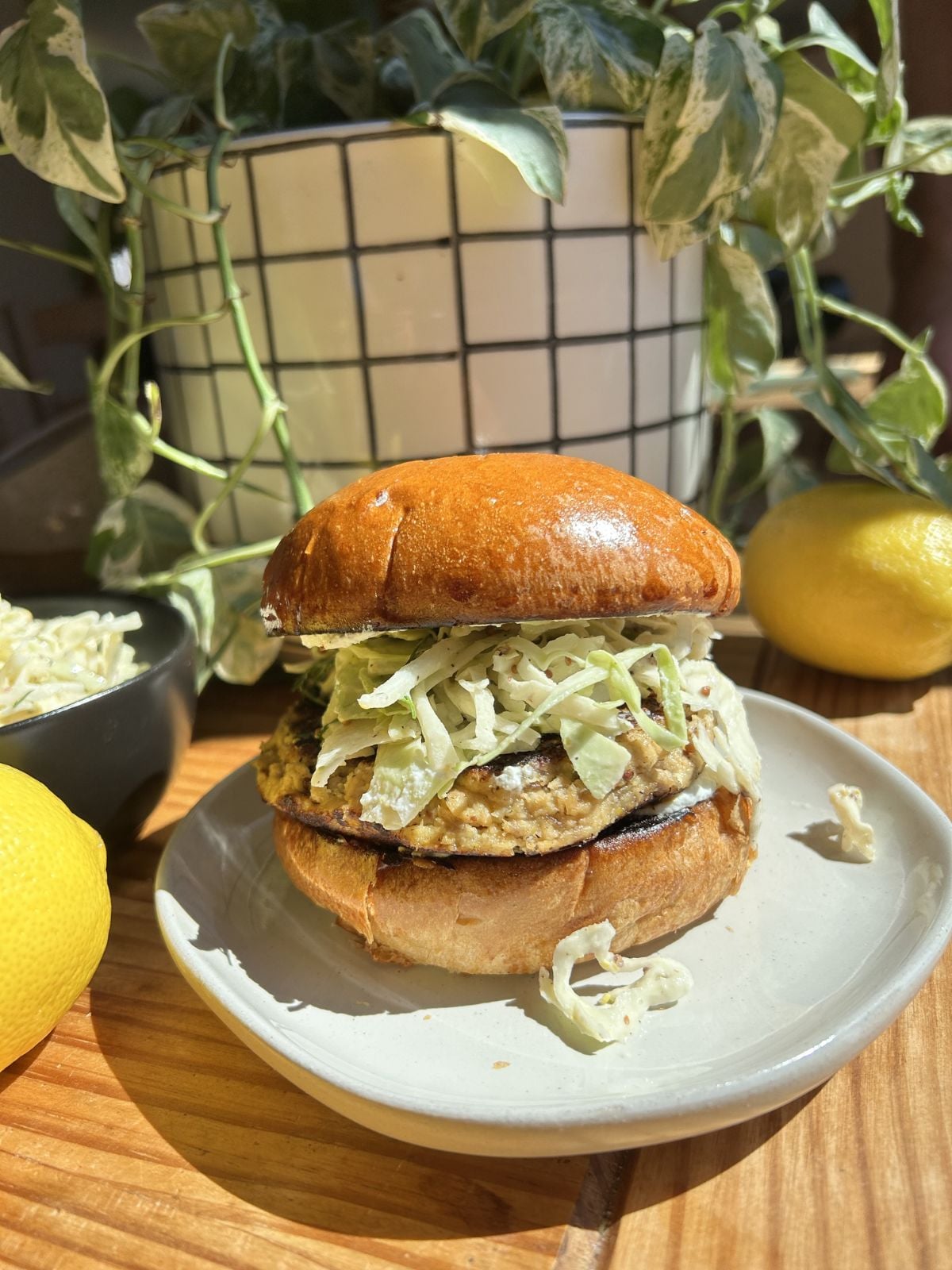
By These canned salmon burgers are golden and crispy on the outside, tender in the center, and packed with about 28g of protein per serving from real food. No breadcrumbs, no mayo! The almond flour and Greek yogurt do all the binding work, plus the same Greek yogurt sauce doubles as the dressing for the herb slaw that goes right on top to take these from a sad can to a restaurant-quality burger!
Want to save this recipe?
Enter your email below & we'll send it straight to your inbox. Plus you'll get fun new recipes from us every week!
My first attempt at salmon burgers resulted in a mixture that fell apart and was somehow charred on the outside but not really cooked well inside. The key was to nail the ratio of salmon to wet ingredients and binders.
But using my salmon patties with cornmeal and swapping that (or panko, like other recipes) for almond flour kept the crust crispier longer without making the burger dense. I also use the same Greek yogurt base built with Dijon, lemon, and cayenne in the patty and as the sauce for the slaw, which means the flavor goes all the way through. The herby slaw takes about 3 minutes to throw together and makes this high protein dinner feel like an actual meal.
Jump to:
really mash it up!
When working with canned salmon (or any canned meat, really), it's super important to really break it up with a fork. If larger pieces remain, the burger or patty won't stay together, so break it up really small and mix well so the binder can get in between every piece.
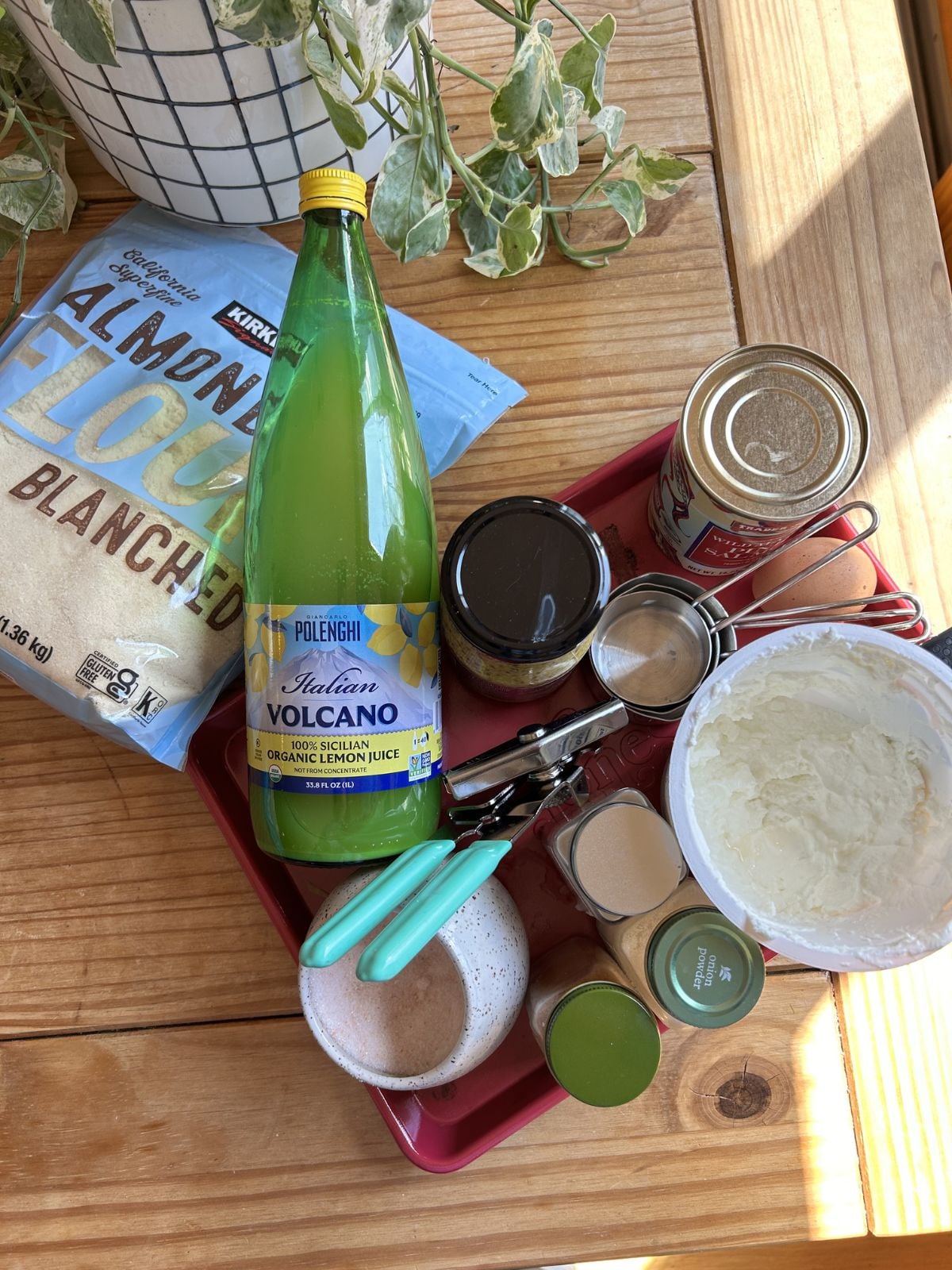
key ingredients & swaps
All substitutions are a 1:1 substitute unless otherwise noted. See the recipe card for quantities.
- Pink salmon (canned): Trader Joe's sells a can that's 15oz, and while this works, they don't stay together as well because there's not enough binder for this amount of salmon. If you want to use fresh cooked salmon (or leftovers from these bang bang salmon bowls), flake it finely and make sure it's not wet.
- Egg: The primary binder. One egg is enough. We haven't tested a flax egg here, but let us know if you do.
- Almond flour: Absorbs moisture and holds the patty together without making it heavy or bready. Oat flour, panko, or cornmeal is a decent swap if almond flour isn't available.
- Greek yogurt: Half goes into the burger as a binder and moisture source, half becomes the base of the slaw dressing. Plain, unsweetened, full-fat or 2% both work. If you like Greek yogurt, check out our list of dinner recipes with Greek yogurt!
- Dijon mustard: Takes these to that "oh my gosh these are so good" level! Spicy brown mustard works. Yellow mustard does NOT work here.
- Lemon juice: Brightens everything. Fresh or bottled, both are fine.
- Spices: Keep it simple with just a little onion powder, garlic powder, salt, pepper, and cayenne. Omit the cayenne if concerned about spice.
- Coleslaw mix: One bag of pre-shredded slaw mix makes this whole thing weeknight-fast. Any shredded mix works - classic cabbage or a broccoli slaw both work well.
- Fresh herbs: Dill, parsley, or chives are all great here. A mix of any two is even better. Dried herbs are a fine swap in a pinch - use about 1 teaspoon total instead of ½ cup fresh.
This recipe has not been tested with other substitutions or variations. If you replace or add any ingredients, please let us know how it turned out in the comments below!
oil or butter is a must!
I also love my cast-iron grill for this (we've done them both ways). But because the burgers are so tender, you definitely need some oil or butter to prevent them from sticking.
what kind of salmon to use
If you've never cooked with canned salmon before, it can feel a little intimidating, especially when you open the can and find bones and skin still attached. Here's what you need to know.
Pink vs. red salmon: Pink salmon is milder, less expensive, and works perfectly in burgers where the other flavors carry. Red salmon (also labeled sockeye) is richer and more flavorful - worth it if you can find it. Either is fine here!
Boneless and skinless: This is the easiest option and what we recommend for this recipe. It's ready to use straight from the can. If you buy regular canned salmon, the small soft bones are completely edible and add calcium, but they can affect the texture of a burger. Remove the larger pieces if they bother you.
Quality matters: Canned salmon varies a lot by brand. Wild-caught Alaskan salmon will have better flavor and texture than lower-quality alternatives. Wild Planet is a widely available option worth trying.
Fresh salmon as a swap: Cooked and flaked fresh or leftover salmon works beautifully in this recipe. Just make sure it's fully cooled and not wet before mixing.
step by step: tips to nail this recipe every time
- Drain the salmon really well: Press it with a paper towel after draining from the can. Excess liquid is the main reason these fall apart. If the mixture feels wet after mixing, add another tablespoon of almond flour before forming the patties.
- Break up the salmon first: This is critical to getting a tender burger that holds together. Break the pieces up small to ensure the burger stays together but if you do this while mixing and overwork the batter, the burgers become dense and tough.
- Medium heat, not high: High heat crisps the outside before the center heats through. Medium heat lets them develop a proper crust over 3-4 minutes per side. You're looking for a deep golden brown, not just lightly colored.
- Don't move them: Set the patty in the pan and leave it. Flipping too early or pressing down with a spatula breaks the crust and causes sticking. When it releases easily from the pan on its own, it's ready to flip.
quick recipe video
if your mixture is hard to shape
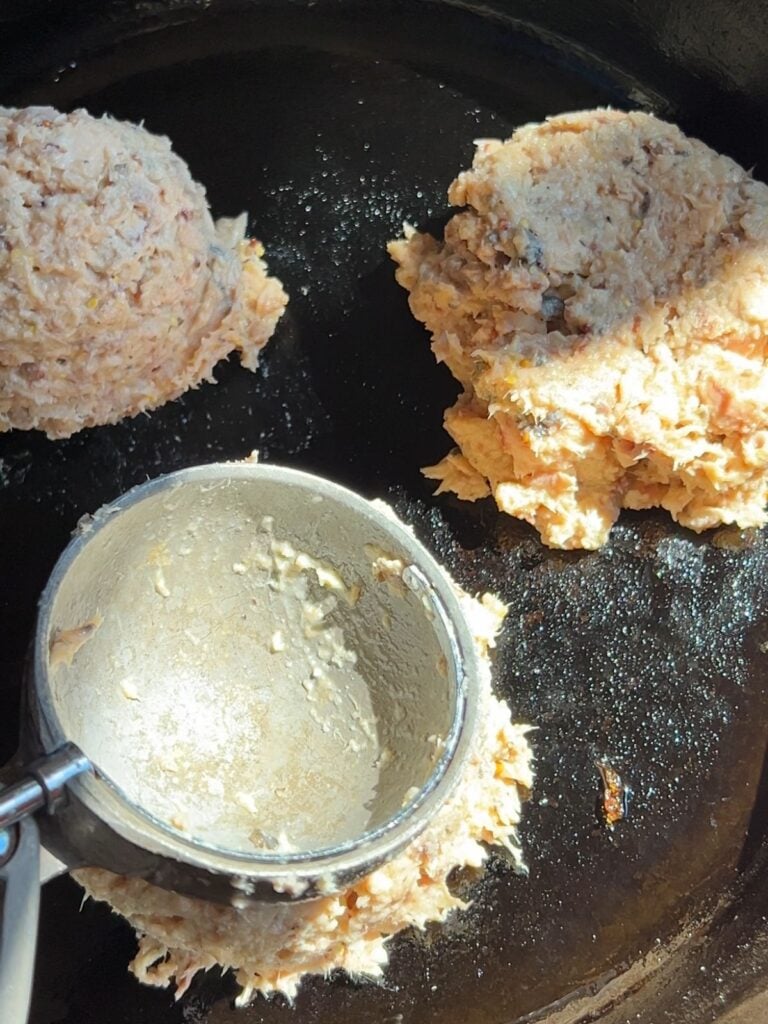
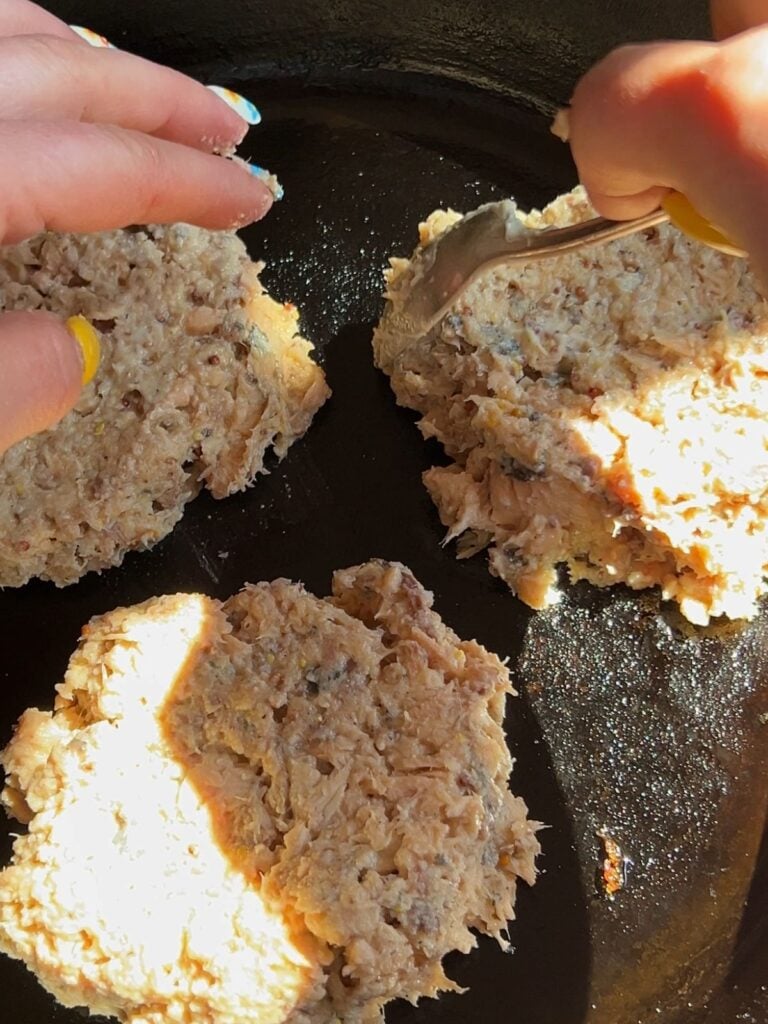
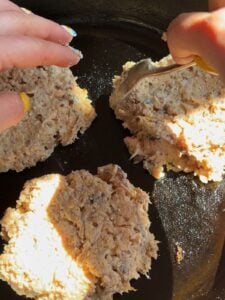
You can pop the mixture in the freezer for 15 minutes to help it firm up before scooping. But honestly, they taste best when you use a spoon or ice cream scoop to scoop out the mixture, then gently press down the tops while using the back of the spoon to shape the outside. Check out the video and the photos below for help with this. Plus, less messy hands!
how to serve it
These are flexible. A few ways we love them:
- Over the herb slaw - delish as is!
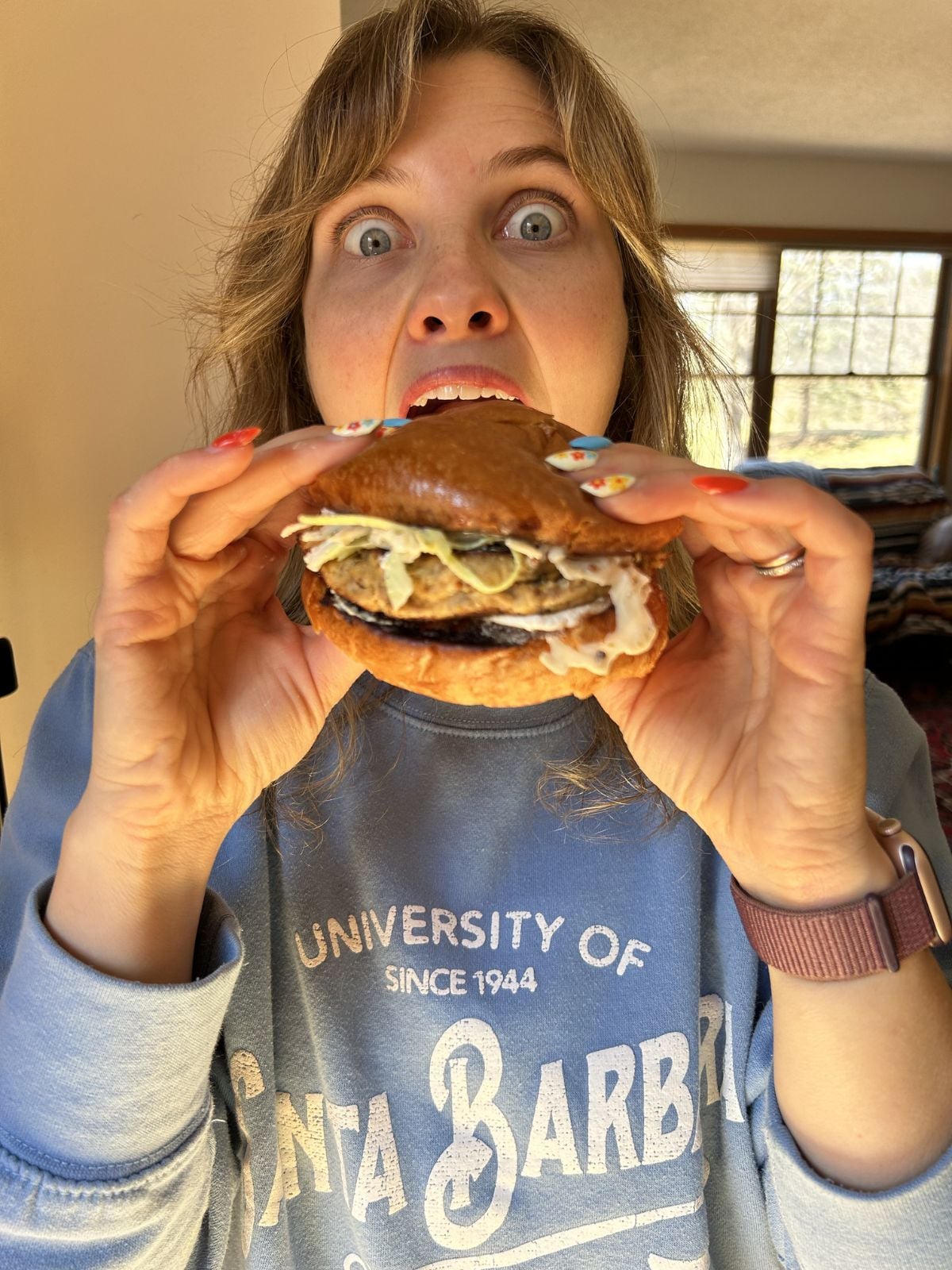
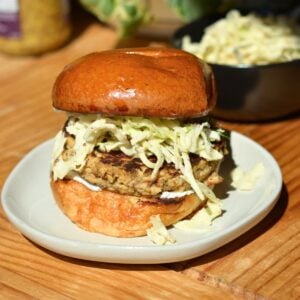
- On a bun with the slaw piled on top and an extra smear of Greek yogurt or a swipe of Dijon. A brioche or toasted English muffin both work well.
- Over greens as a salad situation - the slaw dressing doubles as the salad dressing.
- Meal prep bowls with rice or quinoa and roasted vegetables. The patties reheat well in a skillet or air fryer.
- As an appetizer, make them smaller (about 2 inches across) and serve with Greek yogurt dip on the side.
troubleshooting & testing notes
My patties are falling apart in the pan: Two causes: too much liquid in the salmon, or the salmon isn't broken up enough for the binder to work. Make sure the salmon is broken up enough for the binder to work. You can also pop the dough in the freezer to set a bit before shaping.
The outside is brown, but the inside feels mushy: That's usually underdone, not a texture issue. Give them another 90 seconds per side on medium-low heat with a lid loosely on top to let steam through. Canned salmon is already cooked, so "food-safe" isn't the issue - you're looking for the center to firm up and feel set when you press lightly.
The slaw got watery: The cabbage releases liquid over time, especially if dressed in advance. Dress it right before serving, or press the slaw mix dry in a clean towel first if you're prepping ahead.
Testing note: I tested these with both panko and almond flour, and while panko gives you a slightly crunchier exterior, almond flour holds the moisture better and doesn't absorb the yogurt's tang the way breadcrumbs do. The flavor stayed cleaner.

Recipe
canned salmon burgers (no breadcrumbs)
Ingredients
for the burgers
- 2 cans 6 oz each pink salmon (drained and dried as best you can)
- 1 large egg
- ¼ cup almond flour
- 4 tablespoons plain Greek yogurt (unsweetened)
- 4 teaspoons Dijon mustard
- 2 teaspoons lemon juice
- 2 teaspoons onion powder
- 2 teaspoons garlic powder
- ⅛ teaspoon cayenne pepper
- ½ teaspoon salt
- ½ teaspoon black pepper
- 1 teaspoon oil or butter for frying
for the herb slaw
- splash of milk (to thin)
- 1 bag about 12 oz coleslaw mix (about 12 oz coleslaw mix)
- ½ cup mixed fresh herbs (roughly chopped (dill, parsley, and/or chives))
- salt and pepper to taste
Before you start!
If you make this recipe, please take a moment to leave us a review. We love to hear from you!
Instructions
- Add the drained, 2 cans 6 oz each pink salmon to a large bowl. Break up any large pieces. Heat your skillet to medium heat with a bit of oil, or the grill.
- Add the 1 large egg, ¼ cup almond flour to the salmon in a large bowl. In a small bowl combine 4 tablespoons plain Greek yogurt, 4 teaspoons Dijon mustard, 2 teaspoons lemon juice, 2 teaspoons onion powder, 2 teaspoons garlic powder, ⅛ teaspoon cayenne pepper, ½ teaspoon salt, and ½ teaspoon black pepper. Add half to your salmon mixture and reserve the rest for the slaw.Stir until combined and you can form patties with a spoon.
- Form into 4 even patties, about ¾ inch thick. I like to just use an ice cream scoop to place it on the hot skillet and then use the back to press down the top and carefully use a spoon to shape the outside. Optional is to place them on a plate and refrigerate for 10 minutes.When the skillet is hot, add the salmon patties.

- Make the slaw: stir the remaining yogurt mixture with a splash of milk until it reaches a dressing consistency. Toss with the 1 bag about 12 oz coleslaw mix and fresh ½ cup mixed fresh herbs and additional salt and pepper as desired. Set aside.
- Cook 3-4 minutes per side without moving them, until deeply golden on the outside and set in the center.
- Serve over or alongside the herb slaw with your favorite buns. We love brioche!
Video
Notes
Looking for more information?
Additional substitution information can be found above in the substitution section of this post.
Nutrition Disclaimer
Nutritional information is an estimate and for informational purposes only.

drop us a note!