
 By
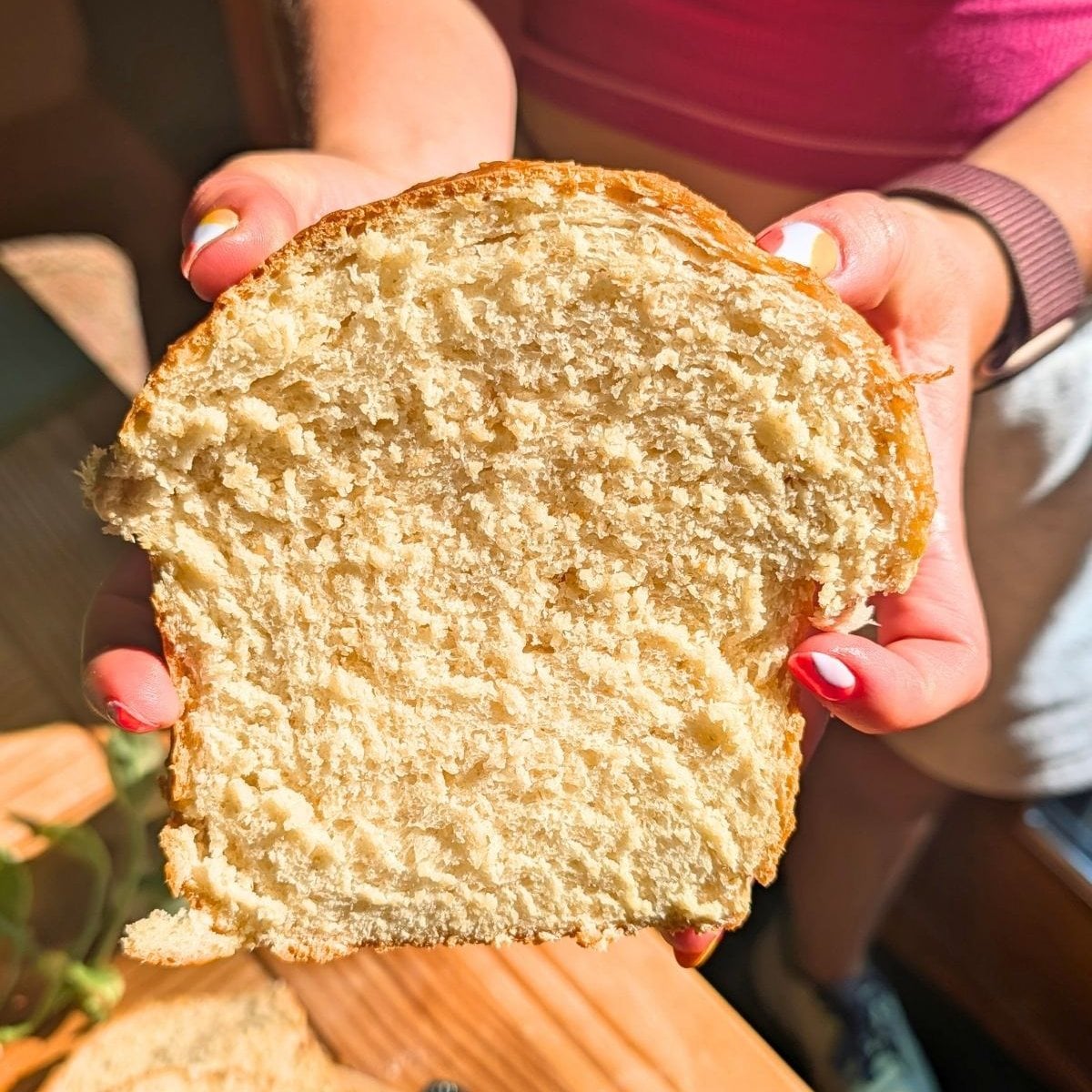
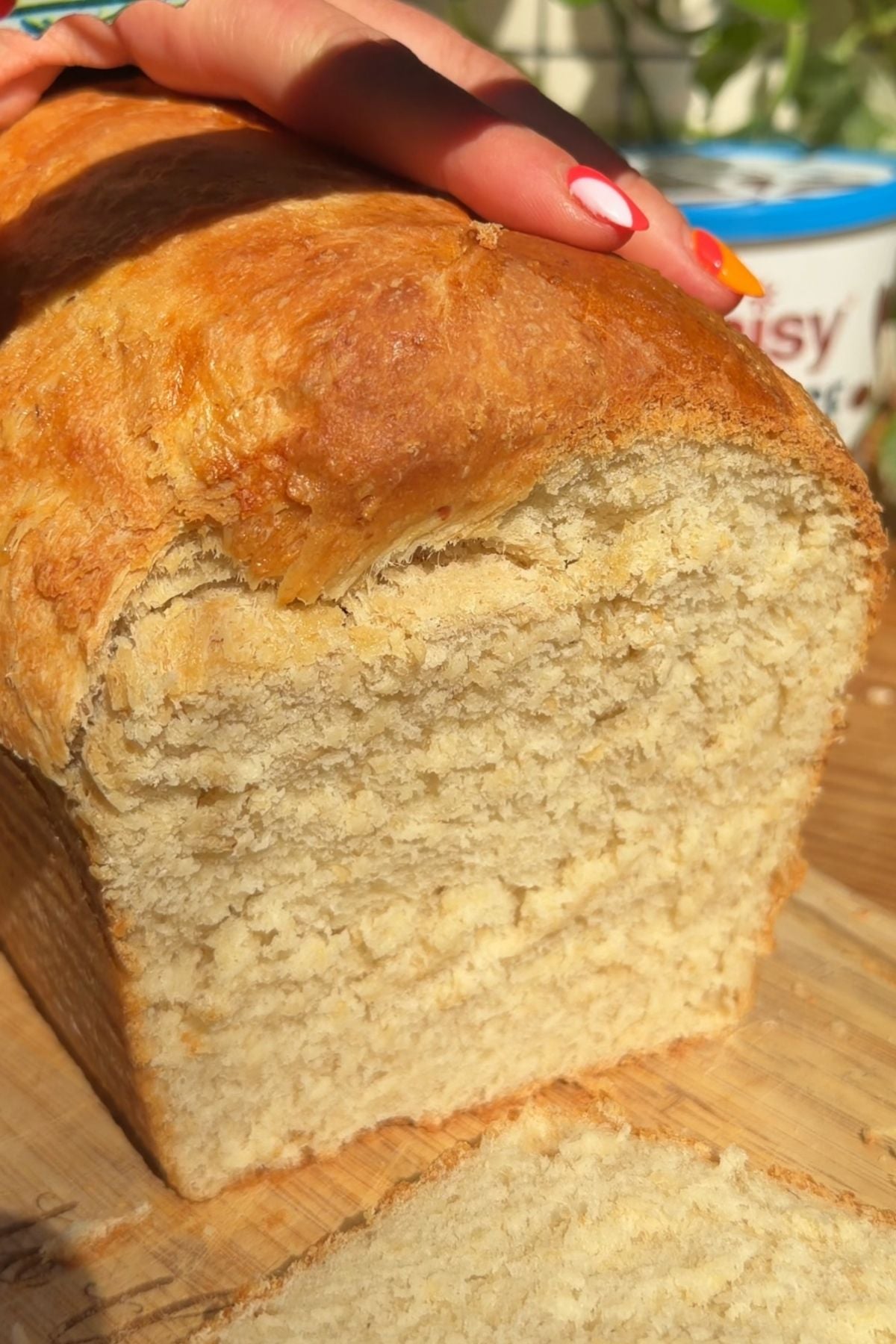
By This white honey oat sandwich loaf has 13g of protein per slice and not a scoop of protein powder anywhere. Cottage cheese and egg whites do all the work, the oats blend right in, and nobody has to know. It slices clean, toasts beautifully, and holds up to an actual sandwich.
Want to save this recipe?
Enter your email below & we'll send it straight to your inbox. Plus you'll get fun new recipes from us every week!
If you already make our cottage cheese cinnamon rolls, this is the same idea stretched into a loaf pan, and there are plenty more high protein baking ideas where this came from 🍞
Jump to:
we have to soak the oats!
Pulse the oats, egg whites, and cottage cheese together in a blender, then walk away for 15-20 minutes. It will thicken noticeably while it sits, and that thickening is the oats hydrating. This is what makes them disappear into the loaf instead of showing up as chewy little flecks in your sandwich. Don't rush it and don't skip the blending part. This ensures kids actually eat it for school lunches!
key ingredients & swaps
All substitutions are a 1:1 substitute unless otherwise noted. See the recipe card for quantities.
- Active dry yeast: If it doesn't foam in 5 minutes, it's dead. Start over with a fresh packet, it's a much better use of your time than trying to rescue a loaf that will never rise.
- Warm water: About 110°, which is usually the hottest water from your tap. Too hot and you'll kill the yeast before it gets going.
- Honey: It feeds the yeast and brings that soft sweetness that makes this taste like a proper sandwich loaf rather than health bread.
- Old-fashioned rolled oats: Steel cut and quick cook won't work here.
- Egg whites: Pull them out 30 minutes before you start so they're not fridge cold.
- Cottage cheese: Any fat level works here. Greek yogurt works as a swap too.
- Salted butter, melted: Keeps the crumb soft.
- Bread flour: Bread flour has the gluten strength to handle a wet dough, which matters a lot in this recipe. All-purpose works but the loaf will be softer and less structured, so keep it closer to 3½ cups.
- Bread flour, held back: A separate half cup that goes in a tablespoon at a time during kneading, only as needed. You may not use all of it. I used about a third of a cup.
- Egg, for the wash: Brushed over the top before baking. Egg whites work here too.
This recipe has not been tested with other substitutions or variations. If you replace or add any ingredients, please let us know how it turned out in the comments below!
step by step: tips to nail this recipe every time
- Let the soaker actually sit: 15-20 minutes, until it visibly thickens. This is the difference between oats that vanish and oats you can feel.
- Bring your egg whites and cottage cheese to room temperature: Pull them out 30 minutes ahead. Cold ingredients slow the rise down. Just don't go above 90° or you'll start setting the whites.
- Go easy on the reserve flour: Add it a tablespoon at a time and stop the moment the dough pulls away from the sides and feels like an earlobe. It's a rather wet dough.
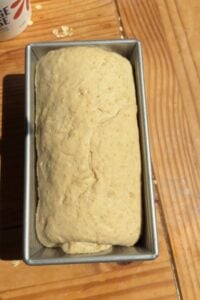
- Let it crown: On the second rise, you want the dough about an inch above the rim of the pan before it goes in the oven. It rises a ton too in the oven!
- Bake to temperature, not to color: 190° internal is done. If the top is golden before the middle is there, tent it with foil for the last stretch.
quick recipe video
err toward slack
This is a wet dough, and it's supposed to be. If it feels workable before you've used all the reserve flour, stop right there. A wetter dough gives you a softer crumb and a slightly better protein-to-calorie ratio, and bread flour has enough gluten strength to handle it. I only used about a third of the reserve half cup. Yours might want a little more or a little less depending on your flour and your kitchen, so go by feel rather than by measurement here.
baking 2 loaves
I baked this in one bread pan, and it was large and in charge! But you could definitely split into 2 for more normal-size loaves and double the slices. Arguably better for kids' lunches.
troubleshooting & testing notes
My loaf came out dense.
Usually too much flour. It's tempting to keep adding until the dough stops feeling sticky, but this one is meant to stay slack. Stop as soon as it pulls from the sides.
The top browned before the inside was done.
Tent it with foil for the last stretch of the bake and keep going until it hits 190° internal. The color and the doneness don't arrive at the same time on a loaf this size.
The crumb is gummy where I sliced it.
It was cut too warm. Turn it out onto a rack right out of the pan and let it cool all the way through before the knife comes anywhere near it. I know. It's hard.
My rise took forever.
Cold ingredients are the usual culprit. Give the egg whites and cottage cheese 30 minutes on the counter before you start.
how to store it
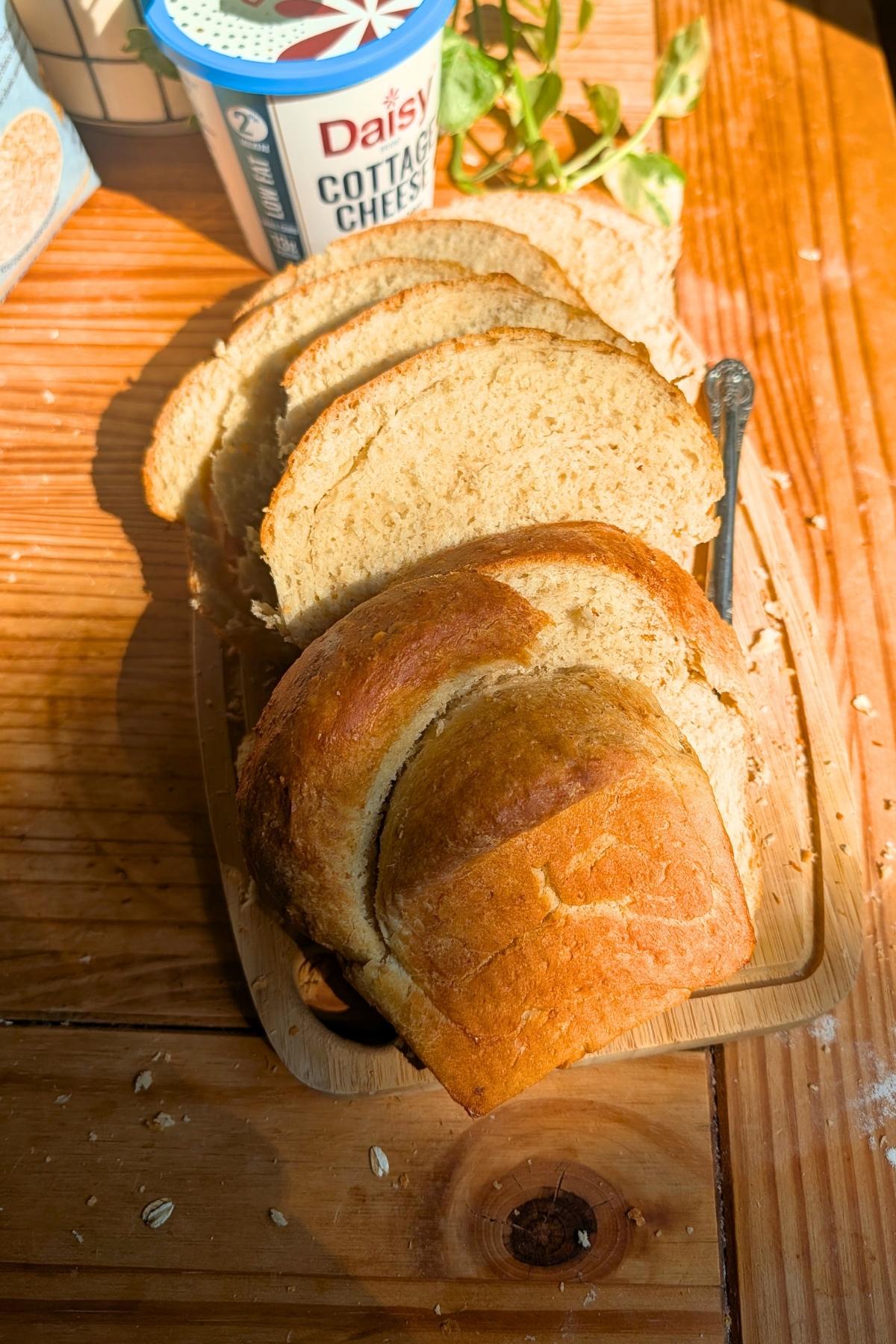
This freezes beautifully, so I'd slice the whole loaf and stash it if you're not going through it fast!
- Room temperature: 3 days in an airtight bag.
- Freezer: Slice it first, then freeze up to 3 months.
- Toasting: Straight from frozen, no thawing needed.
- Best uses: Toasted with butter and honey, actual sandwiches, or french toast on a weekend morning.

Recipe
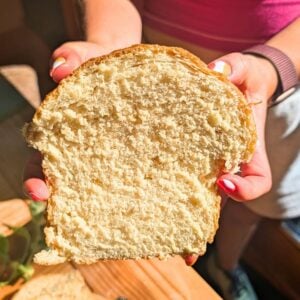
white honey oat protein bread (13g per slice, no protein powder)
Ingredients
- 2 teaspoon active dry yeast
- ¼ cup warm water (about 110°, hottest tap)
- ¼ cup honey
- 1 cup old-fashioned rolled oats (not steel cut or quick cook)
- 1-¼ cups egg whites (room temperature)
- 1 cup cottage cheese (any fat level, room temperature)
- 2 tablespoon salted butter (melted)
- 3 cups bread flour
- ½ cup bread flour (held back, added as needed)
- 2 teaspoon salt
- 1 large egg (for the wash)
Before you start!
If you make this recipe, please take a moment to leave us a review. We love to hear from you!
Instructions
- Pulse the 1 cup old-fashioned rolled oats, 1-¼ cups egg whites, and 1 cup cottage cheese briefly in a blender, don't overblend! Aim for about 10 seconds of blending total (so about 10 pulses that are 1 second each). Let sit 15-20 minutes to hydrate. It will thicken noticeably. This is what makes the oats disappear.
- Stir the ¼ cup honey into the ¼ cup warm water in a large bowl using a wooden or stainless spoon. Add the 2 tsp active dry yeast and let sit 5 minutes until foamy.
- Pour the soaked oats mixture and the 2 tbsp salted butter and 2 tsp salt into the bloomed yeast and stir. Add the 3 cups bread flour and mix with a wooden spoon until a shaggy dough forms.
- Knead with a dough hook 6-8 minutes, or by hand 10-12. Add the ½ cup bread flour a tablespoon at a time only as needed, until the dough pulls from the sides and feels like an earlobe. You may not use it all, it's a rather wet dough.

- Oil a clean bowl, turn the dough to coat, cover, and let rise in a warm spot until doubled. The oven with just the light on works great.
- Punch down and shape into a log by rolling it out into a wide rectangle then fold the long sides over about 2-3 inches, then roll it up like a log from the short side (the video is very helpful here!). Place seam side down in a greased 9x5 loaf pan, cover, and let rise until the dough crowns about an inch above the rim. (Or split between two pans for more normal-size loaves.)
- Preheat to 350°. Beat the 1 large egg and brush the top. Bake 60-75 minutes (or less for 2 smaller loaves), tenting with foil for the last 35 if the top is golden early. Done at 190° internal. It rises a ton in the oven!
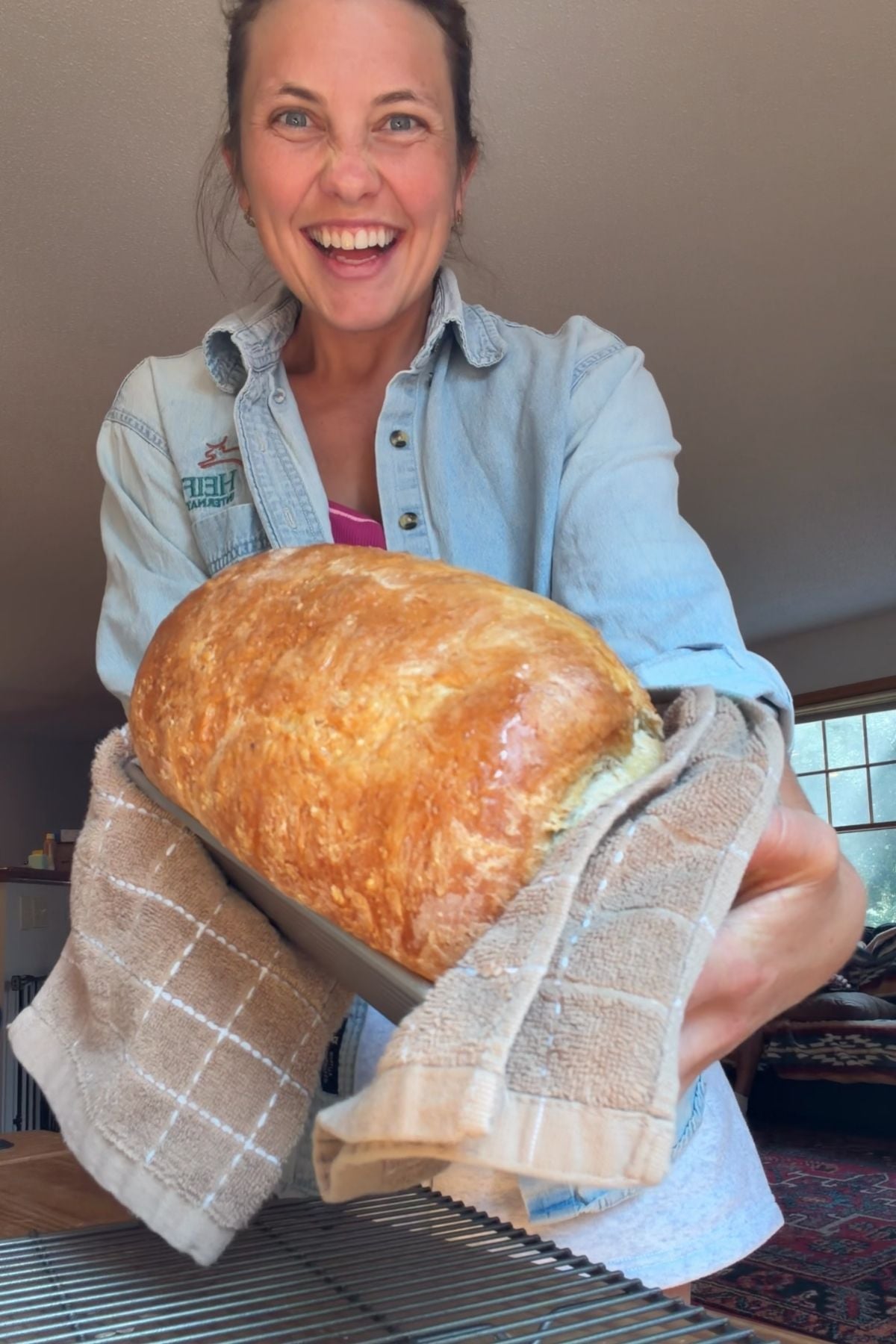
- Turn out onto a rack immediately and cool completely before slicing. Cutting it warm will gum the crumb. Slice into 10 thick slices.
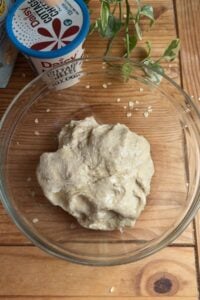
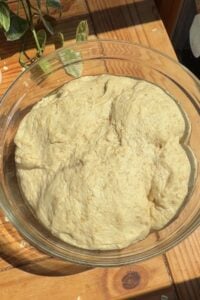
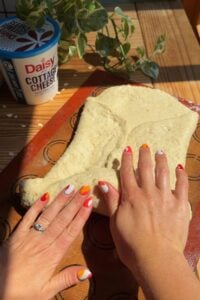
Video
Notes
Looking for more information?
Additional substitution information can be found above in the substitution section of this post.
Nutrition Disclaimer
Nutritional information is an estimate and for informational purposes only.


would this work in a bread machine? would I just work up to when the ingredients combine and put it in the machine (in the order my machine uses)?
I think it would as long as you blended the cottage cheese.
Did you try it in your bread maker? if so what setting did you use and how did it turn out? Thanks
This recipe was easy and it turned out so good! Thank you so much for this high protein recipe! My entire family loved it!
Thanks so much for the review!
Do you think gf bread flour could work replacing reg flour?
yes, for sure!
Took a chance and made this in the bread machine. I was worried about how wet the dough was but it came out great!
Great to hear!
I just made this tonight-I split the dough in half. I made 9 rolls with half, and 9 cinnamon rolls with the rest- they filled a 9x9 perfectly- and baked in about 25 minutes. Next time I think I’ll pulse the oats by themselves a bit before adding the cottage cheese & egg whites to get them a bit finer. Overall this is a definite keeper- the cottage cheese is indistinguishable in this bread! Great recipe- thanks!
Love that!!
Hi, I am planning on making this tomorrow! I am a little confused by the nutrition facts - is each slice 13g of protein or the whole loaf?
Per slice